
I. Product & Packaging Finalization
Before approaching any retailer, your product and its packaging must be retail-ready. This isn't just about functionality; it's about compliance, shelf appeal, and logistical readiness. Missing these foundational steps can lead to costly delays or outright rejection.
Product Definition & Compliance:
Finalize product specifications, features, and benefits.
Ensure all necessary certifications and regulatory approvals are obtained (e.g., FDA, CE, UL, CPSC).
Confirm patent, trademark, and intellectual property protections are in place.
Develop a clear, concise unique selling proposition (USP).
Packaging Design & Engineering:
Design packaging for shelf appeal, brand consistency, and durability.
Incorporate all mandatory retail elements: UPC/EAN barcodes, nutritional facts, ingredient lists, country of origin, safety warnings.
Optimize packaging for efficient shipping and display (e.g., stackability, planogram fit).
Conduct drop tests and environmental testing to ensure product integrity during transit and storage.
Source and confirm packaging materials and suppliers, ensuring cost-effectiveness and scalability.
II. Supply Chain & Operations Readiness
Retailers demand reliability. A robust supply chain ensures you can meet demand without disruption, a key factor in securing and maintaining retail partnerships. This phase focuses on operationalizing your production and distribution.
Manufacturing & Inventory Planning:
Establish production capabilities and capacity to meet initial and sustained demand.
Develop inventory management strategies, including safety stock levels.
Implement quality control processes at all stages of manufacturing.
Logistics & Distribution:
Select and onboard third-party logistics (3PL) partners or establish in-house capabilities.
Define shipping methods, lead times, and warehousing solutions.
Implement EDI (Electronic Data Interchange) capabilities for seamless order processing with retailers.
Plan for reverse logistics and returns management.
Costing & Pricing Strategy:
Accurately calculate Cost of Goods Sold (COGS) including production, packaging, and freight.
Develop a multi-tiered pricing strategy: MSRP, wholesale, promotional pricing.
Analyze competitor pricing and market positioning.
Confirm margin requirements for your business and potential retail partners.
III. Market Strategy & Retailer Engagement
This is where you articulate your product's value proposition and secure its place on shelves. A well-defined market strategy is crucial for targeting the right retailers and making a compelling case.
Target Retailer Identification:
Identify primary and secondary retail channels (e.g., mass merchandise, specialty, grocery, e-commerce).
Research target retailers' category needs, consumer base, and vendor requirements.
Understand retailer specific terms, payment structures, and onboarding processes.
Sales & Marketing Collateral Development:
Create a compelling sales deck that highlights product features, benefits, market opportunity, and profit potential for the retailer.
Develop product samples for buyer review.
Prepare high-quality product photography and video assets.
Draft initial press releases and media kits.
Retailer Pitch & Negotiation:
Secure meetings with relevant category buyers.
Present your product, demonstrating market fit, consumer demand, and profit potential.
Negotiate terms: pricing, payment, promotional support, slotting fees (if applicable).
Finalize vendor agreements and purchase orders.
"A retail launch isn't just about getting on the shelf; it's about building a sustainable presence that drives consistent sales and profit. Meticulous preparation across product, supply chain, and market strategy is non-negotiable for long-term success."
IV. Launch Execution & In-Store Support
The agreement is signed, now the real work begins. Ensuring a smooth launch and sustained performance requires active management post-PO.
Initial Order Fulfillment:
Manufacture and ship initial orders according to retailer specifications and deadlines.
Confirm receipt of goods by retailer distribution centers.
Merchandising & Planogram Compliance:
Ensure product is displayed correctly according to agreed-upon planograms.
Develop and distribute point-of-purchase (POP) materials.
Coordinate with retailer merchandising teams for optimal shelf placement.
Marketing & Promotional Activities:
Execute pre-launch and launch marketing campaigns (digital, social, PR, in-store promotions).
Monitor and adjust campaigns based on early performance data.
Support retailer-specific promotions and circulars.
V. Post-Launch Analysis & Optimization
Launch is a milestone, not the finish line. Continuous monitoring and adaptation are critical for optimizing performance and fostering a strong retail partnership.
Sales & Inventory Tracking:
Monitor sell-through rates, inventory levels, and weeks of supply.
Analyze sales data by region, store, and promotion.
Identify fast-moving and slow-moving SKUs.
Performance Review & Feedback:
Schedule regular performance reviews with retail buyers.
Gather feedback on product performance, customer reception, and operational efficiency.
Conduct post-mortems on promotional effectiveness.
Iteration & Growth:
Based on data and feedback, identify opportunities for product improvements or line extensions.
Develop strategies for increasing sales velocity and expanding distribution within the retailer or to new channels.
Plan for seasonal promotions and future innovation launches.
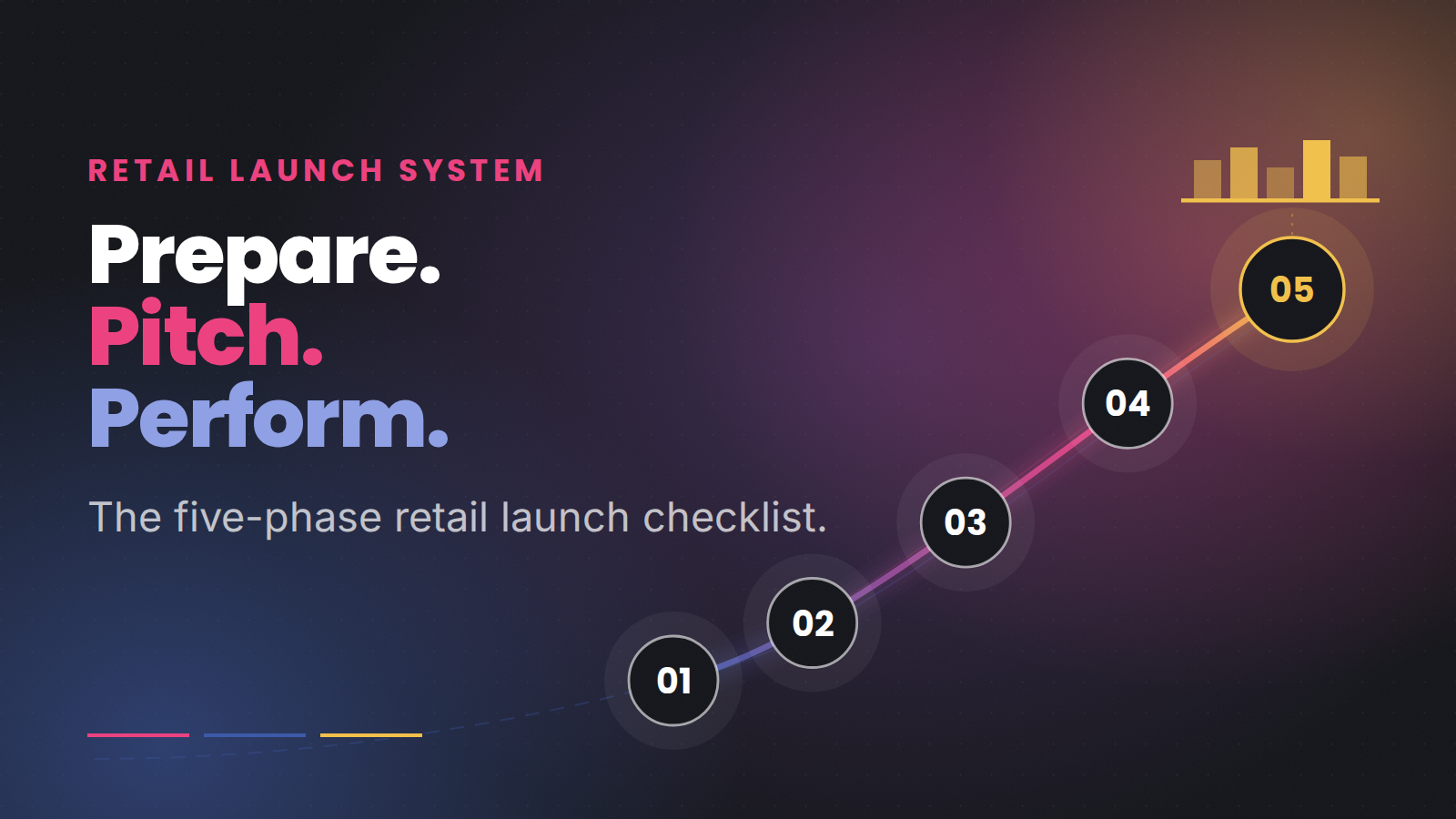
Executing a successful retail launch is a complex, multi-faceted endeavor. This checklist provides a strategic framework, but true success hinges on diligent planning, proactive communication, and a commitment to continuous optimization. Trebuchet helps companies navigate these waters, ensuring your product doesn't just reach the shelf, but thrives there.